

Routine confirmations, reminders and follow-ups never stop. Iris handles them so your staff can focus on advanced work and the patients in front of them.
It's 2 p.m. on a Tuesday. A front desk coordinator is checking in patients, a biller is chasing a claim, and a nurse just remembered that three follow-up calls from last week never went out. Everyone is busy. Nobody is stuck, but everyone is behind.
Most of that behind-ness comes from routine work: confirmations, reminders, follow-ups, and questions that come in all day. None of it is hard. It just never stops.
With Iris, the routine work gets handled, so your team can spend their time on what actually needs them.
Iris is an AI platform built on a decade of ambulatory healthcare experience and 10 years of real patient and operational data. It works as a teammate for your patients, your staff, and your leadership. For your staff, it takes the routine off their plate so they can focus on the advanced work and the patients in front of them.
Iris Takes the Routine Off Your Plate
Confirmations go out. Reminders get sent. Follow-ups happen on schedule. Routine questions get answered. Iris handles the repetitive work that fills your team's day, working through the workflows each role is responsible for and tracking what's done and what isn't.
When something falls outside what Iris should handle on its own, it flags it with the context needed to act, and it asks permission before taking a step. Your team stays in control while the routine stops consuming their attention.

Your Team Focuses on the Work That Needs Them
With routine work handled, staff can give their attention to the parts of the job that require judgment and experience: the complex billing question, the patient who's nervous about a procedure, the care plan that needs a closer look, the conversation that needs a steady, human voice.
That's where your team adds the most value, and it's where they want to spend their time. Iris makes room for it.
Talking to Patients Gets the Attention It Deserves
Patient conversations often get squeezed between tasks. A staff member is mid-claim when the phone rings, or finishing a note when a patient walks up with a question. Iris carries the routine follow-through in the background, so when your team is with a patient, they can be fully present.
Patients get more of your team's attention. Staff get more of the conversations they went into healthcare to have.
Work Moves in Parallel
Practices have good ideas about how to run more smoothly. Those ideas often wait because the day-to-day always comes first. With Iris, routine workflows keep moving while your team focuses on the work in front of them, so improvements can start without pulling everyone off the floor.
Your team gets more done without the day stretching any longer.
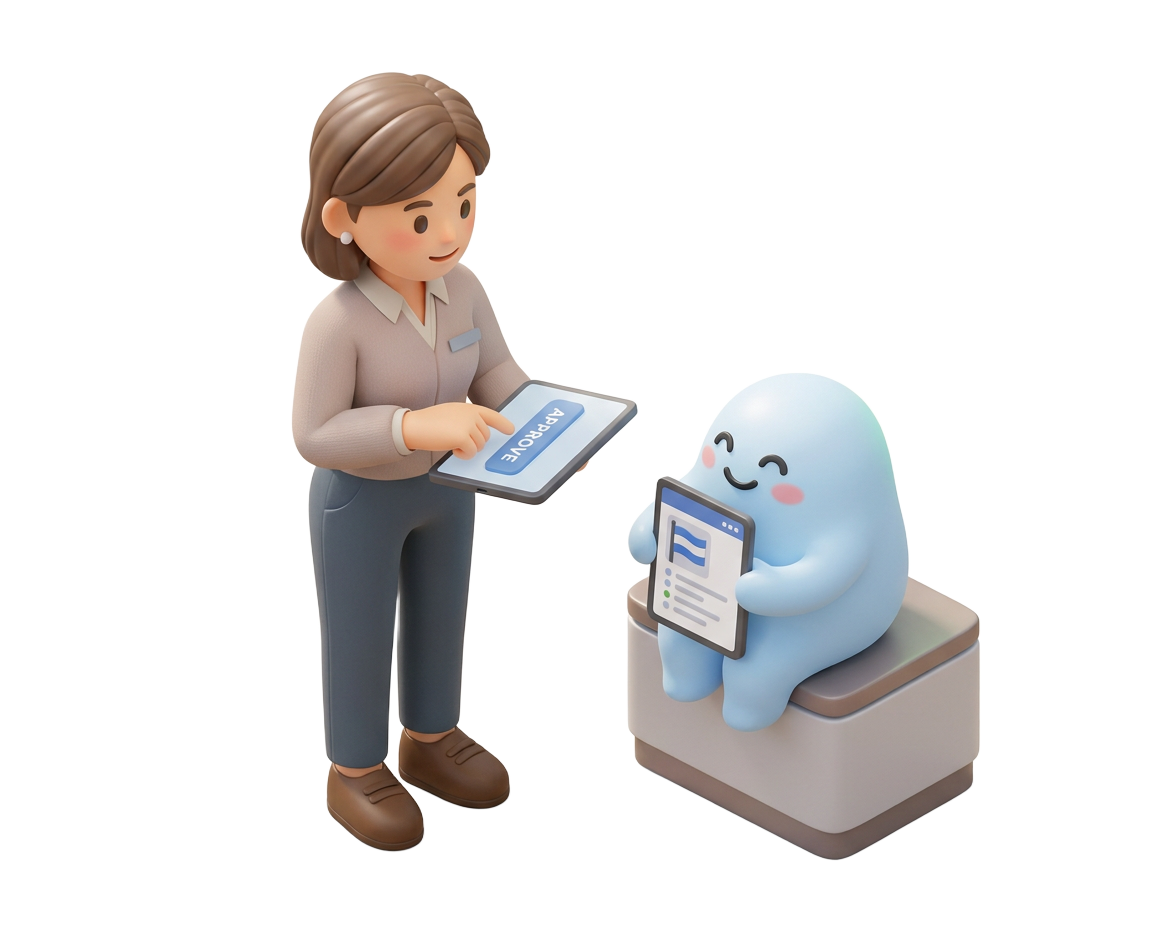
What Changes for Your Staff
The day looks different. Instead of juggling reminders and chasing loose ends, staff spend their time on advanced work and on patients. Fewer tasks slip through. Fewer late nights catching up. Less of the frustration that comes from being busy with things that don't need a person.
Staff also get to see their practice run better, with patients getting timely answers and follow-up happening on schedule. The work feels less like firefighting and more like the care your team set out to provide.
What It Means for Your Practice
When routine work is handled, the whole practice benefits.
Tasks get completed on time, which keeps revenue flowing and reduces the claims and balances that slip through the cracks. Follow-ups happen consistently, which helps close care gaps. Your team can handle the same or more volume without the strain, and their time goes to the work that most affects patient outcomes and satisfaction.
Iris Knows Your Workflows
Iris is built on Qure4u's automation foundation and fed by a decade of data on how ambulatory workflows actually run. It knows which routine tasks tend to get missed, which steps matter most in each workflow, and what keeps a team on track. That knowledge is what lets it handle the routine work reliably, so your team doesn't have to double-check it.
Your Team Teaches Iris, and Iris Learns Your Practice
Iris isn't a black box your staff have to accept as is. Your team controls how it works. You decide which routine tasks Iris handles, how reminders are worded, when it asks for permission, and what it takes on independently. As your team refines its approach, Iris learns from that guidance, so it fits the way your practice actually runs.
The routine work gets handled the way your team would handle it, because your team shaped how it's done.
Welcome to Iris.
— Monica Bolbjerg, MD, Founder & CEO, Qure4u