
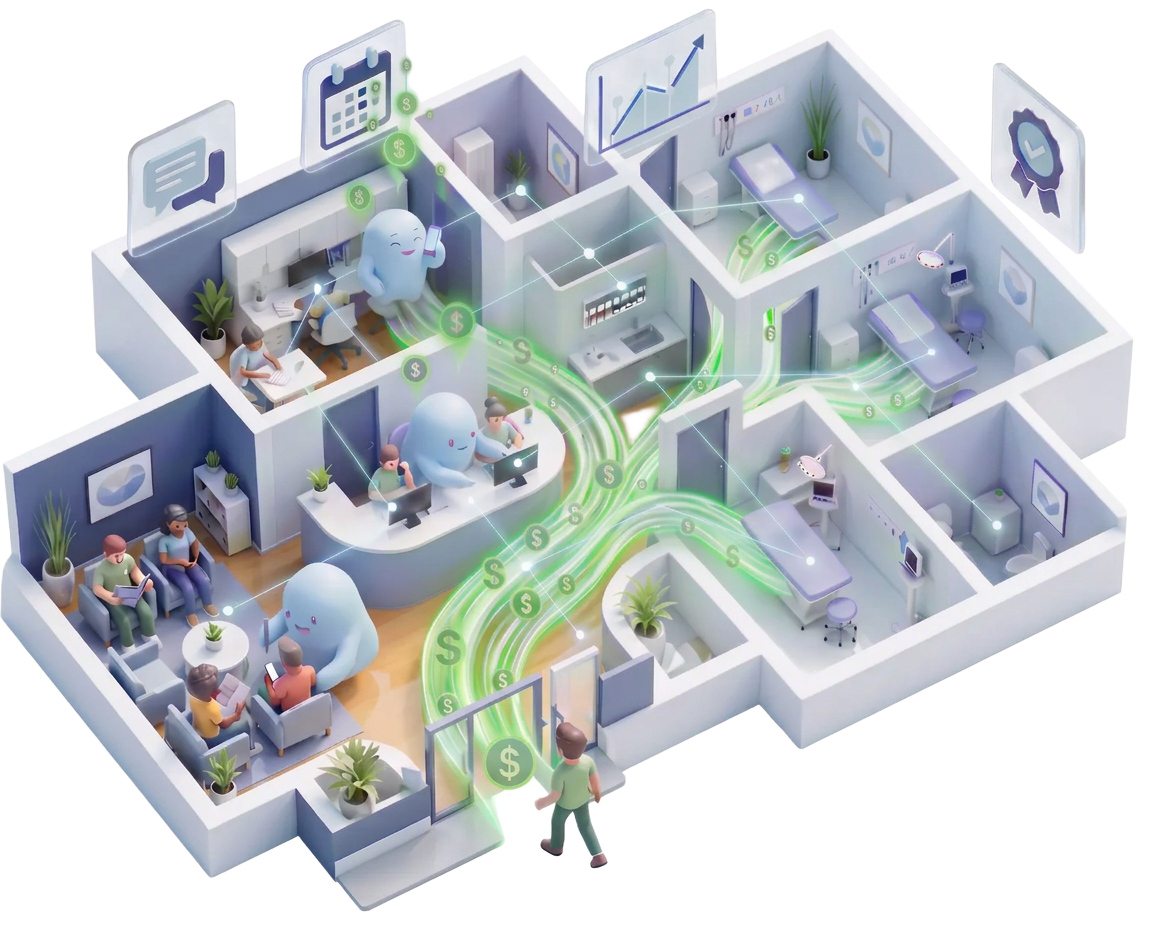
What if every patient who needed help got it the moment they asked, in the channel they already prefer? That's Iris — an AI teammate for patients, staff, and leadership at the same time.
What if every patient who needed help got it the moment they asked, in the channel they already prefer? What if your workflows kept moving in parallel, with support running across every team at once instead of waiting in line? What if the platform itself spotted the opportunities you were missing and offered to act on them?
That's Iris. An AI platform built on a decade of ambulatory healthcare experience and 10 years of real patient and operational data, now working as a teammate for patients, staff, and leadership at the same time.
Qure4u has spent years building digital patient engagement tools for ambulatory organizations, MSOs, and health systems, and our modules have earned high patient adoption across everything we offer. Iris takes that foundation and puts intelligence on top of it.
Voice Is the Answer. It Isn't the Whole Answer.
Voice AI has gotten a lot of attention, and it's worth taking seriously. But a phone-first approach solves only part of the problem. Most people don't want to call. Nobody books a flight or a golf tee time by phone, and healthcare is one of the few industries that still treats the phone as the front door.
Voice has a place in the toolkit, and Iris supports it. But we expect it to be the least-used channel, not the foundation. The channels patients reach for most are the ones they already use everywhere else.
Where We Started
Our platform was built as a set of modules: scheduling, check-in, reminders, billing support, outreach, and more. Each one works well on its own. But every module needed people to roll it out, configure it, and tune it to each organization. That meant new capabilities arrived one at a time, and each rollout took time, training, and coordination. The modules were powerful, but the path from idea to live automation was long.
What We Observed
Patients often wanted a conversation, not a menu of options. A request like "I need to reschedule, but my ride fell through" doesn't map neatly onto a decision tree. Patients were also consistently more comfortable texting or chatting than calling, and phone-first access was creating friction that our data showed was avoidable.
Staff were running the day-to-day and had little room to act on improvements they could see. Good workflow ideas waited because there was no bandwidth to get them moving.
Leadership had access to a lot of data but not always the time or the view to spot where automations weren't being used to their full potential.
Each of these pointed to the same need: an intelligent layer that could understand context, act across modules, and support many workflows at once.

What Iris Is
Iris is an AI platform that sits on top of Qure4u's automation foundation. It's conversational, so it understands what someone needs and can ask clarifying questions. It's actionable, so it can trigger the workflows, reminders, and automations already in the platform based on what the patient, staff member, or leader needs. And it's informed by a decade of operational knowledge and 10 years of data on patient behavior and automation performance.
What Iris Does
For patients, Iris meets them where they prefer to communicate. Patients can chat securely on a practice's website or through a link, or start a conversation by text when they call in. Iris understands their request, guides them through what they need to do, and connects them to the right workflow. Voice is available as part of the toolkit, though we expect text and chat to be the channels most patients use.
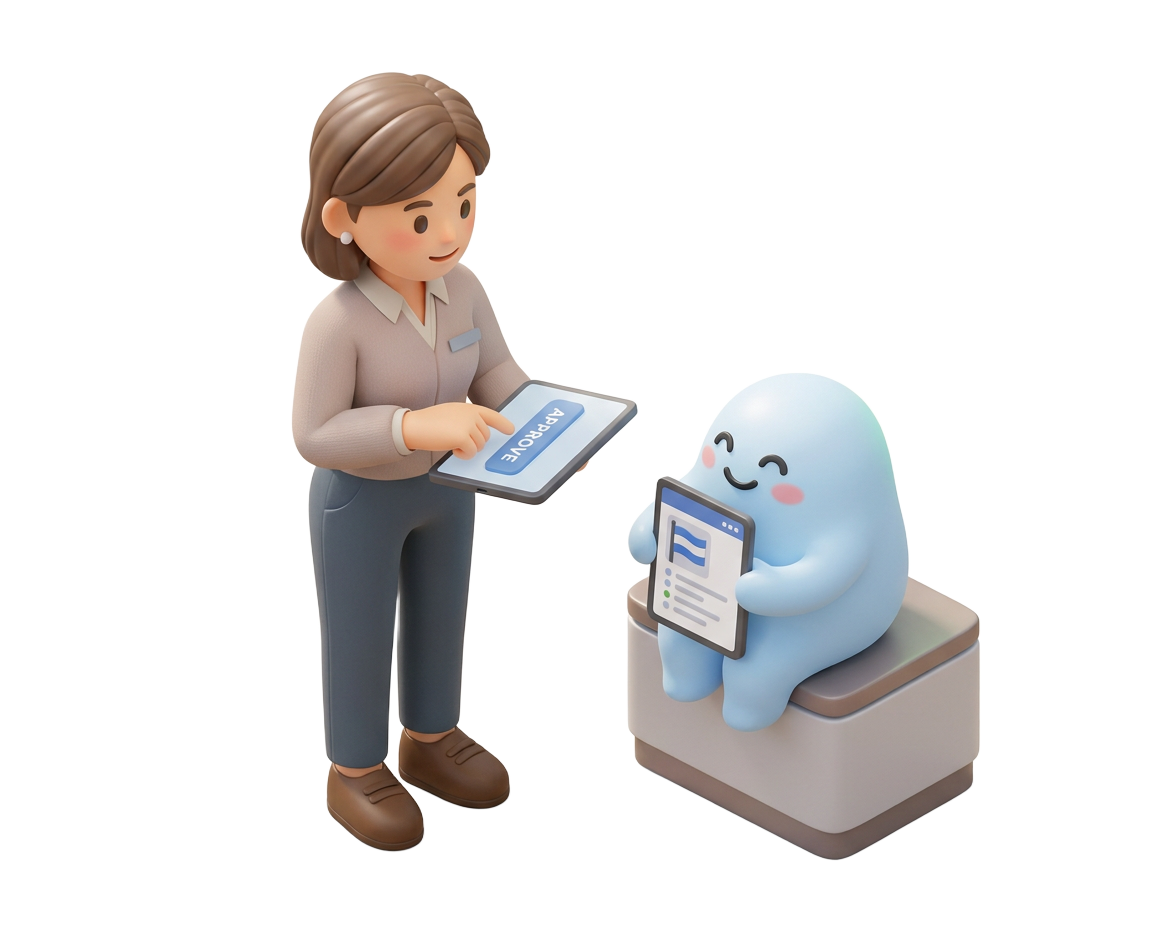
For staff, Iris acts as a teammate that knows their daily workflows. It reminds them about tasks that aren't done, flags what needs attention, and asks permission before helping out. The repetitive work gets handled so staff can focus on what needs a human.
For leadership, Iris surfaces what's easy to miss. It identifies where automations are underused or where new opportunities exist, comes with suggestions, and can carry out approved changes directly. What used to be a multi-month project can become a decision and an execution.
One Platform, Every Role
Iris works at the front office, the back office, with patients at home, and with leadership, all at the same time. Instead of separate assistants for scheduling, check-in, billing, and reporting, one platform understands the whole operation and coordinates across it. That's what lets a change in one place reach the others.
Built Solid, Configured by You
Iris is built to be enterprise-grade: secure, high-performing, and structured so organizations can shape what it says and does. We give organizations the configuration tools to set those boundaries, so they own how Iris works in their practice.
What's Next
The foundation is in place. Our focus now is getting more organizations live on Iris, expanding the channels and capabilities it supports, and learning from every deployment so the platform keeps getting better.
Welcome to Iris.
— Monica Bolbjerg, MD, Founder & CEO, Qure4u